Note 01 — Why we lead with a humectant, not a butter
Formulation note · Updated
Most hand creams are designed to feel luxurious in a single application. Handvela is designed to be used again ten minutes later — and again after that. That one decision changes everything about the formula, starting with what it is built around. This note explains the choice in plain language: what a humectant does, what we give up by leading with one, and why it is the right trade for hands that get washed all day.
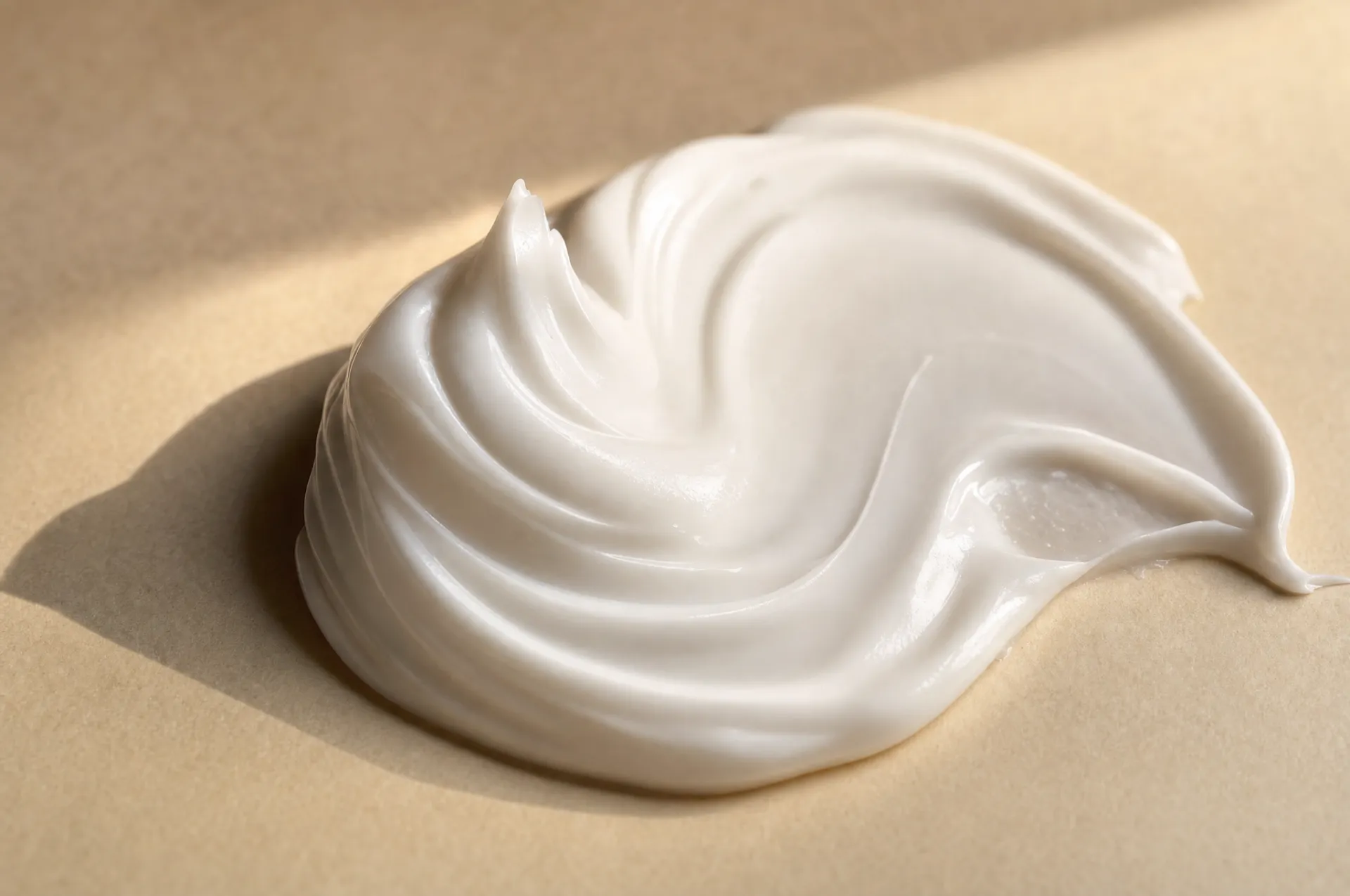
/Three families, three completely different feelings
Almost every moisturising ingredient belongs to one of three families, and which family a cream leads with is the single biggest thing that decides how it feels on your hands. Understanding this makes it possible to predict how a cream will behave before you even open it.
How the three families behave
| Family | What it does | How it feels |
|---|---|---|
| Humectant (glycerin, hyaluronic acid) | Draws water into the outer skin | Light, fast, non-greasy |
| Emollient (squalane, light plant oils) | Smooths and softens the surface | Silky; light ones absorb fast |
| Occlusive (petrolatum, heavy waxes, butters) | Seals the surface to slow water loss | Rich, cushioned, but slick and slow |
None of these is better than the others in the abstract. They are tools for different jobs. The mistake is assuming that the family which feels most luxurious in one application is the one you want for a whole day of washing. For frequent washers, it is usually the opposite.
/The problem with leading on butters and waxes
A cream that feels rich usually leans on heavy occlusives — shea and cocoa butter, beeswax, petrolatum. They form a physical seal on the skin that slows water loss, which is genuinely useful overnight or on cracked skin. But that same seal is what makes the cream sit on top of your hands, transfer to a phone screen, and take real rubbing to disappear.
For someone washing their hands all day, a rich cream is a cream you stop reaching for. It is not a willpower problem — it is a practical one. You cannot chart a patient, plate a dish, or type a message with a film on your hands, so you wait to reapply, and waiting turns into skipping. The most nourishing formula in the world does nothing while it sits in a drawer.
/What a humectant actually does
A humectant works differently. Instead of sealing the surface, glycerin — the most studied humectant there is — pulls water into the outer layer of skin and holds it there. Because it is working with water rather than a heavy oil film, it absorbs quickly and finishes matte. Paired with a light emollient to smooth the surface, you get a cream that disappears in seconds and leaves no residue.
That is the whole reason Handvela leads with a humectant: it is what makes a cream you can genuinely reapply after every wash. The moment you can reapply without friction, the maths of hand care changes — which is the subject of the next note.
“For frequent washing, the cream that gets used ten times beats the richer cream that gets used once.”
/Why we still keep a little occlusive
Leading with a humectant does not mean banning occlusives. A humectant draws water in; without a little something to slow that water escaping again, the effect fades faster. So a well-built fast-absorbing cream still includes a light occlusive or emollient element — just enough to hold the moisture without the heavy, slick seal of a balm. It is a balance, not a purge. The goal is the fastest absorption we can get while still keeping the water where it belongs.
The trade-off, honestly
- 01What you gain: fast absorption, a matte non-greasy finish, and a cream light enough to reapply after every hand wash.
- 02What you give up: the deep, cushioned feel of a heavy balm, and the strong overnight occlusive seal that very dry or cracked skin sometimes needs.
- 03What stays the same: it still moisturises — it just does it in many light passes rather than one heavy one.
/Who this is right for — and who it isn't
- Right for: people whose hands are stripped by frequent washing and who need to reapply through the day without grease.
- Right for: anyone who wants a cream they can use and immediately go back to a screen, a patient, or a prep station.
- Not right for: severely cracked or fissured skin that needs a rich occlusive seal — a heavy balm does that job better, especially overnight.
- A good routine for very dry hands: Handvela by day, a rich occlusive balm at night.
Frequently asked
Does a humectant-led cream moisturise less?
Per single application, a rich occlusive often delivers more. But because a light humectant-led cream can be reapplied after every wash, its cumulative moisturisation across a day usually keeps up with — or beats — a heavy cream used once or twice.
Is glycerin the only humectant that works?
No, but it is the most studied and reliable, which is why it anchors so many fast-absorbing formulas. Hyaluronic acid and a few others do similar work. The point is that a humectant, not a butter, sits near the top of the formula.
Can a humectant dry out my hands in very dry air?
In extremely dry environments a humectant alone can draw moisture from the wrong place, which is exactly why a good formula pairs it with a light emollient to hold water in. It is the balance that matters, not the humectant on its own.
Note: Handvela is a cosmetic hand cream, not a medical product, and makes no medical claims. If you have a skin condition such as eczema or dermatitis, or broken skin, patch-test any new product and check with a healthcare professional.
Sources